<img height="1" width="1" style="display:none" src="https://www.facebook.com/tr?id=1789870351892882&amp;ev=PageView&amp;noscript=1">

Easy Job Search

Search
HOKKAIDO TOUHOKU KANTO CHUBU KINKI SHIKOKU CHUGOKU KYUSYU image/svg+xml

Search by Employee Benefits

  • Housing
  • Free meals
  • Bonus
  • Salary Increase
  • Commuting Allowance
  • Tokutei gino
    Support

Search by Business Type

  • button-japanese-meal-chibistyle
  • button-sushi-chibistyle
  • button-izakaya-beer-grills-chibistyle
  • button-ethnic-bowl-chibistyle
  • button-western-meal-chibistyle
  • button-barbecue-chibistyle
  • button-cafe-cake-chibistyle
  • button-ramen-chibistyle
  • button-dish-fork-knife-chibistyle

Frequently Asked Questions

?
What is Tokutei gino Visa?
?
The Tokutei Gino (Specified Skilled Worker) visa is a Japanese residence status introduced in April 2019 to address labor shortages. It allows foreign workers with verified skills to work in Japan under proper employment conditions, with salary and benefits generally comparable to Japanese workers. There are two categories: Type 1 (up to 5 years) and Type 2 (renewable long-term, with the possibility to bring family and work toward permanent residency).
?
What are the qualifications and requirements to obtain a Tokutei gino Visa?
?
To obtain a Tokutei Gino visa, applicants generally must pass an industry Skill Proficiency Test and a Japanese language test (JLPT N4 or JFT-Basic). However, Technical Intern Trainees who successfully complete the Technical Intern Training Program (usually 3 years) in the same field may be exempt from these exams and can switch to Tokutei Gino directly.
?
What type of work can I do in the food service or manufacturing industry?
?
In the Food Service industry, workers are involved in cooking, food preparation, customer service, and restaurant operation tasks. In the Food and Beverage Manufacturing industry, duties include food production, processing, packaging, and hygiene/sanitation management (excluding alcoholic beverages). Since the number of workers in the Food Service category has already reached around 50,000 out of the national quota of 53,000, the issuance of new COEs and visas for this field may become very restricted or may be temporarily suspended once the quota is fully reached.
?
What types of restaurants can I work in?
?
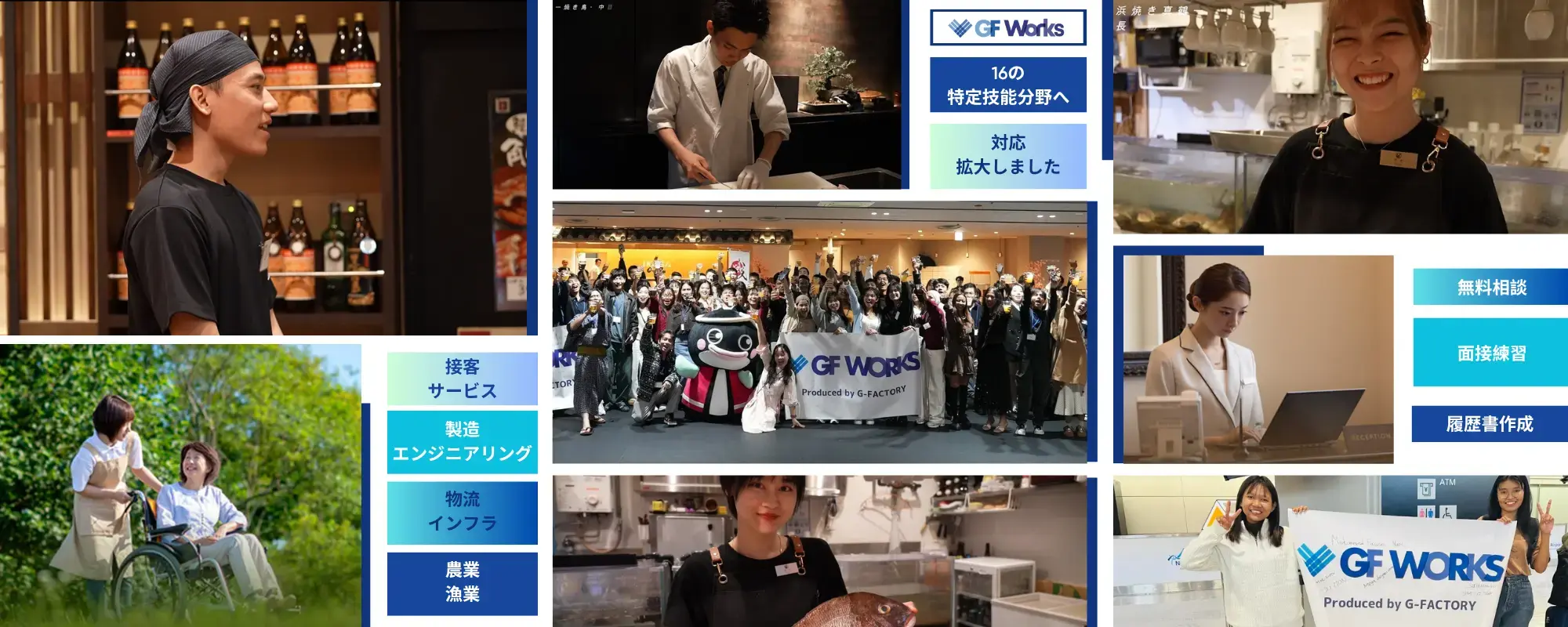
Tokutei Gino workers in Food Service can work in various establishments such as ramen shops, sushi restaurants, izakayas, yakiniku restaurants, teishoku (set-meal) restaurants, Italian/Western restaurants, cafés, family restaurants, and dining facilities within hotels or ryokans.
?
Can I develop my career in the food and beverage industry?
?
Yes. With experience and improved skills, you can build a long-term career and advance to positions such as team leader, store manager, or area manager. Growth depends on your performance, Japanese proficiency, and the company’s internal structure.
?
How can I find a suitable workplace?
?
You can find jobs through Registered Support Organizations (RSOs), recruitment agencies (GF Works), and online job-matching platforms. These organizations support you with job introductions, interview prep, document processing, and orientation for living in Japan.